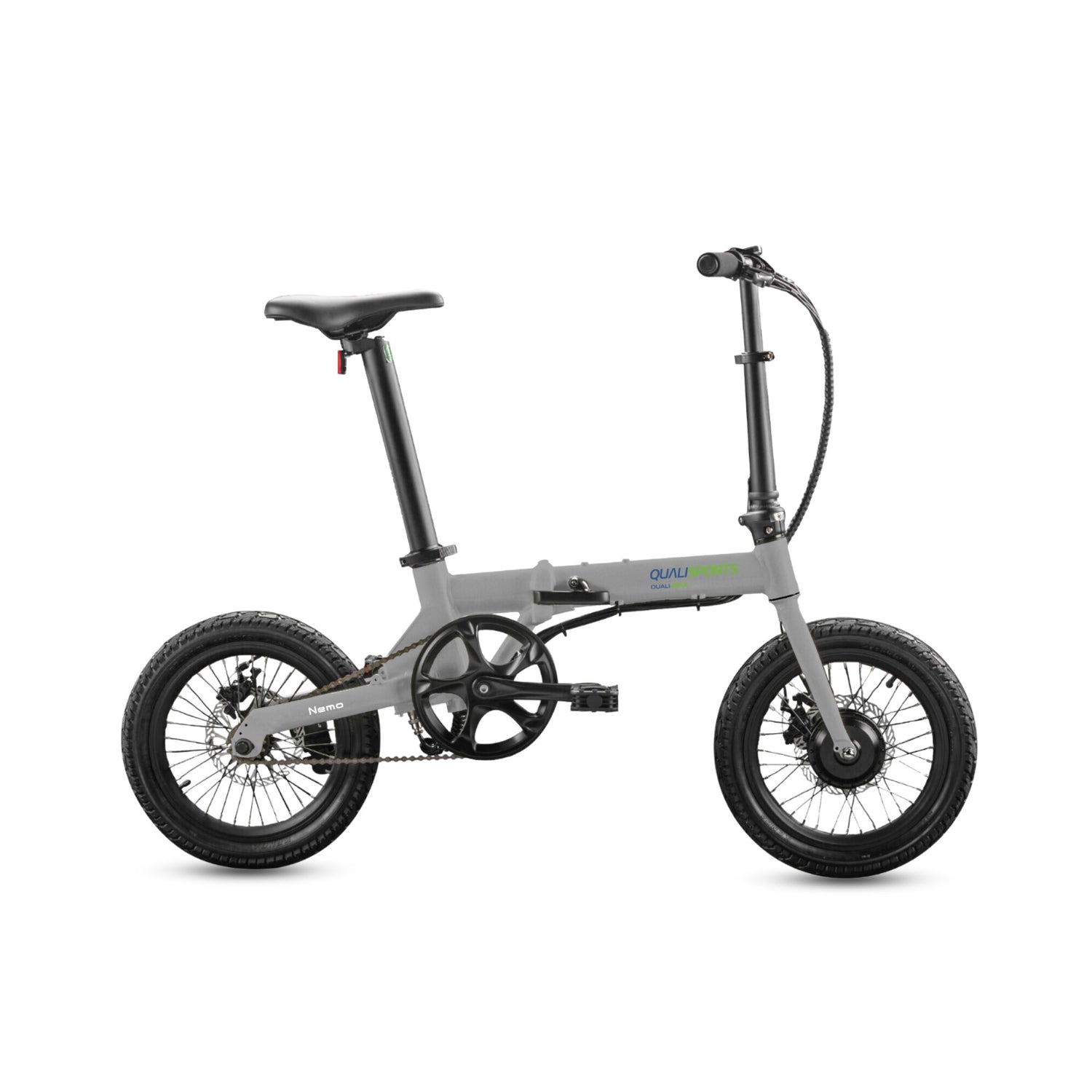
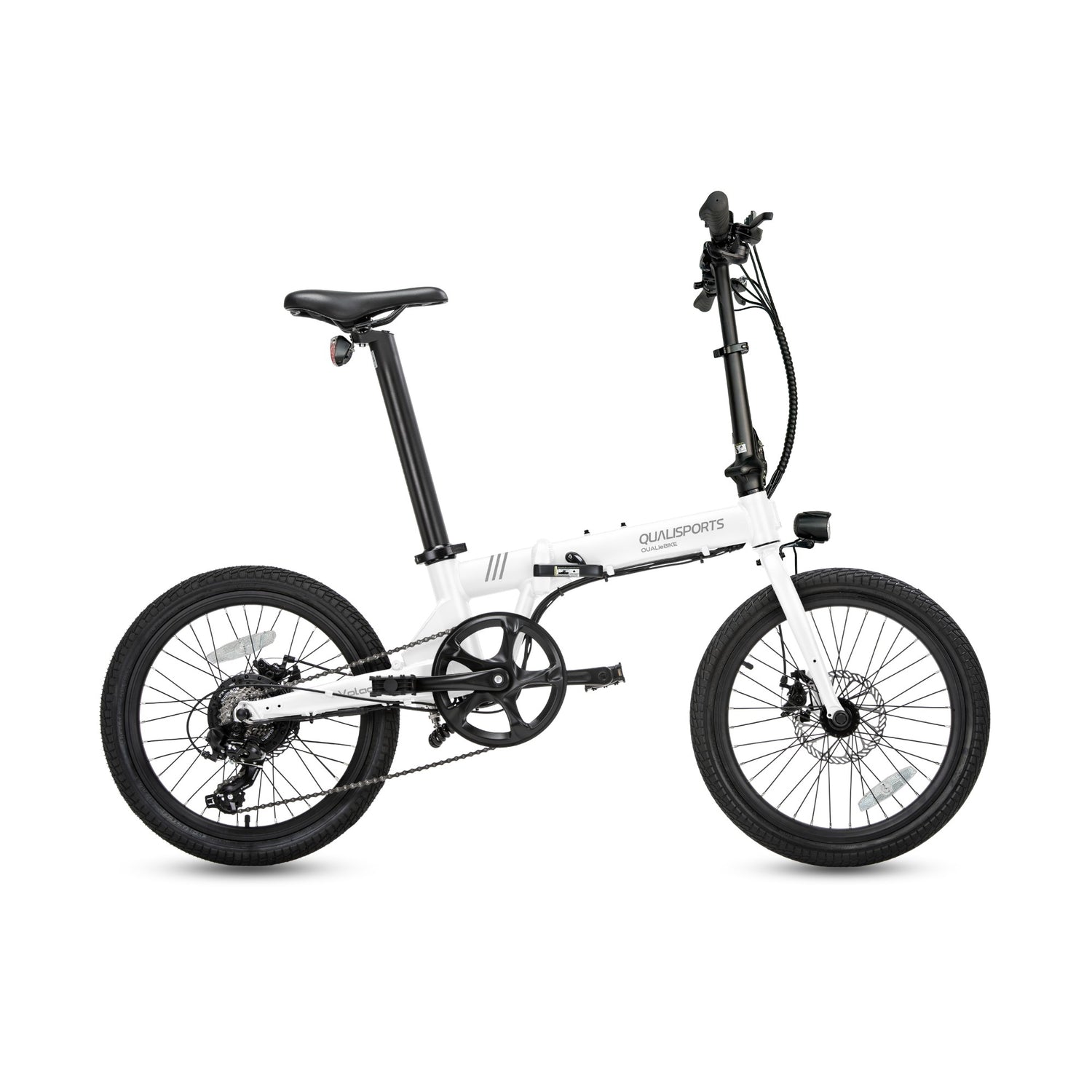
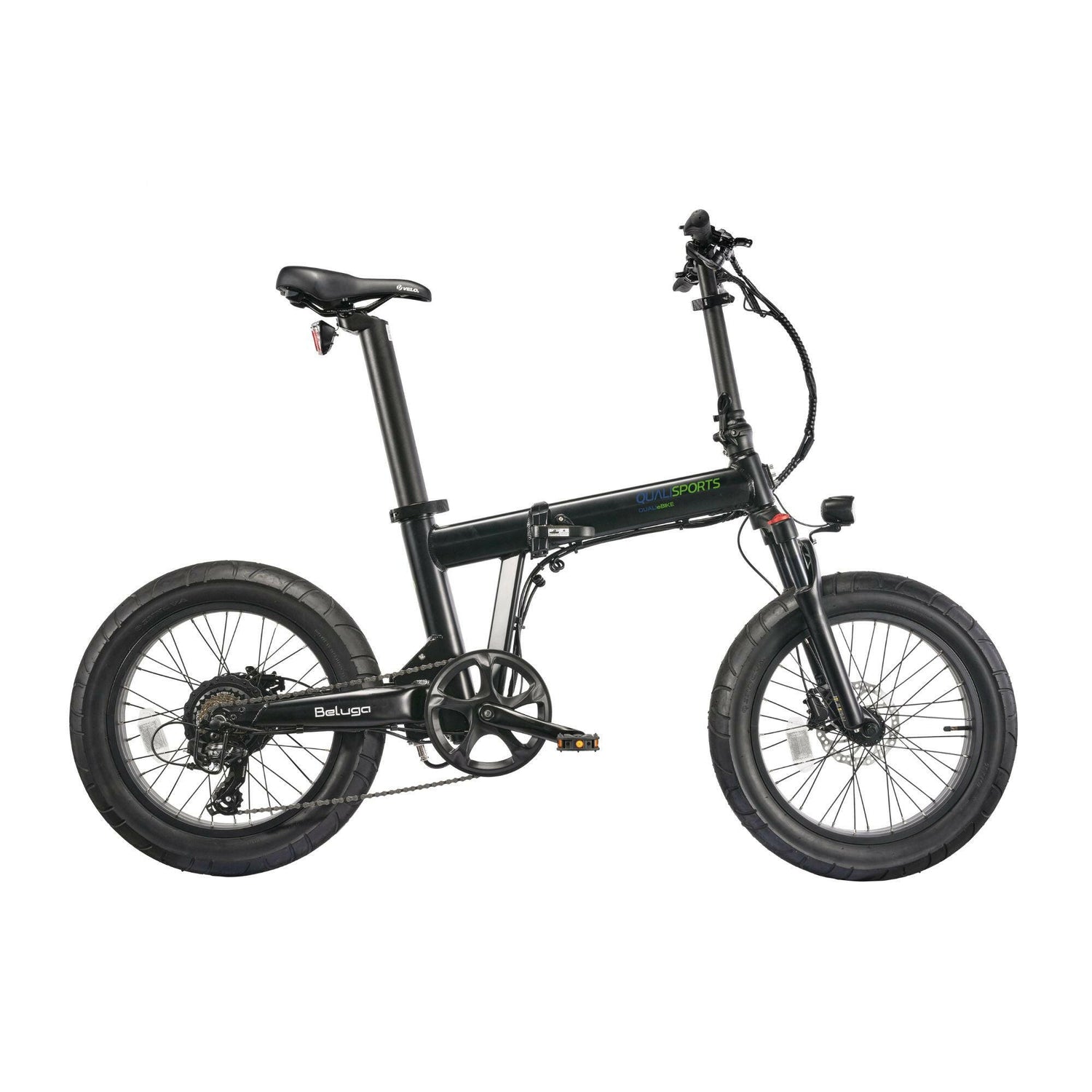

We love everything about these bikes! Even our lil’ wolf, Pico de Gallo, is delighted with the upgrade. The fabulous front rack makes his ride more stable and less bumpy.


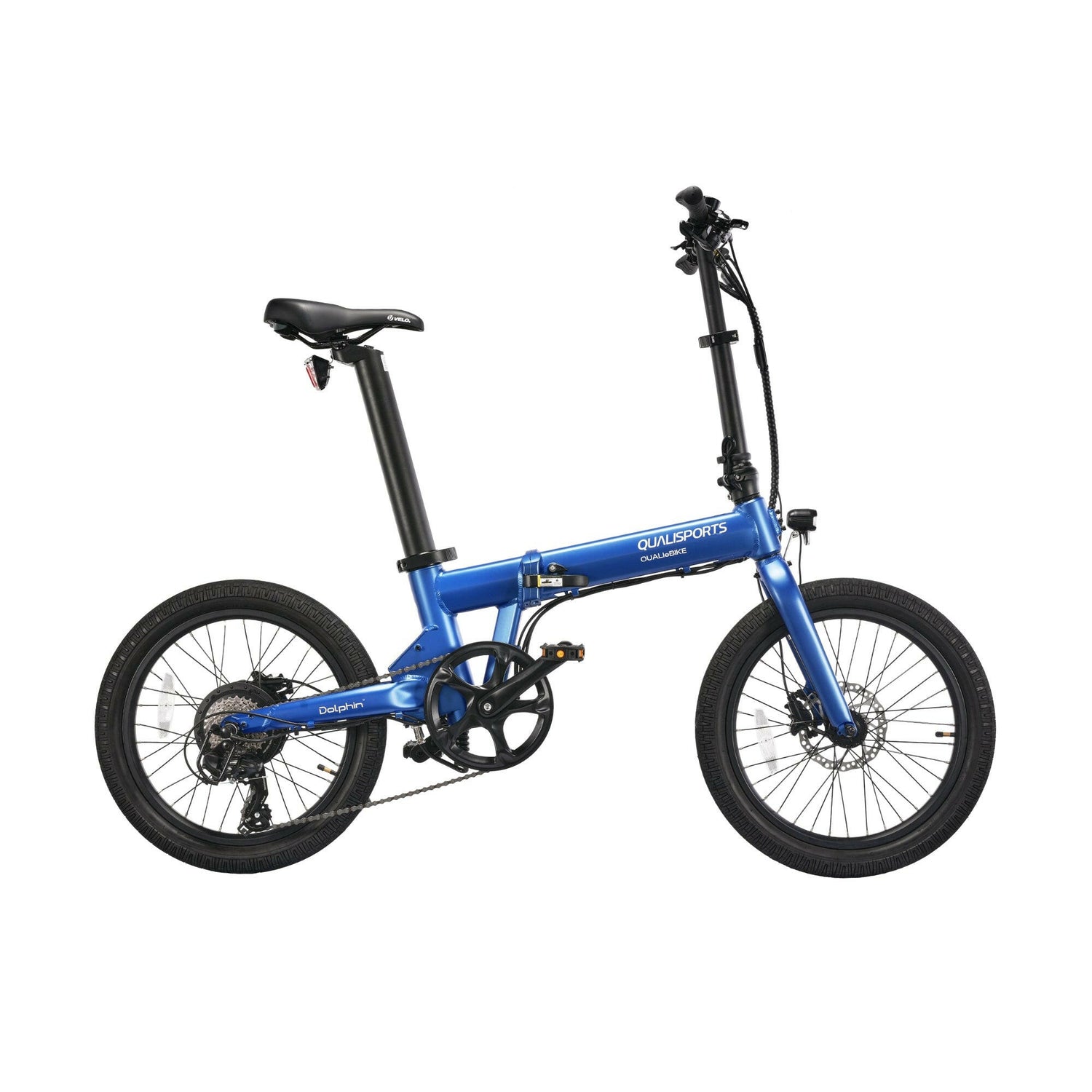




Lightweight Design
Engineered for portability and ease of use.

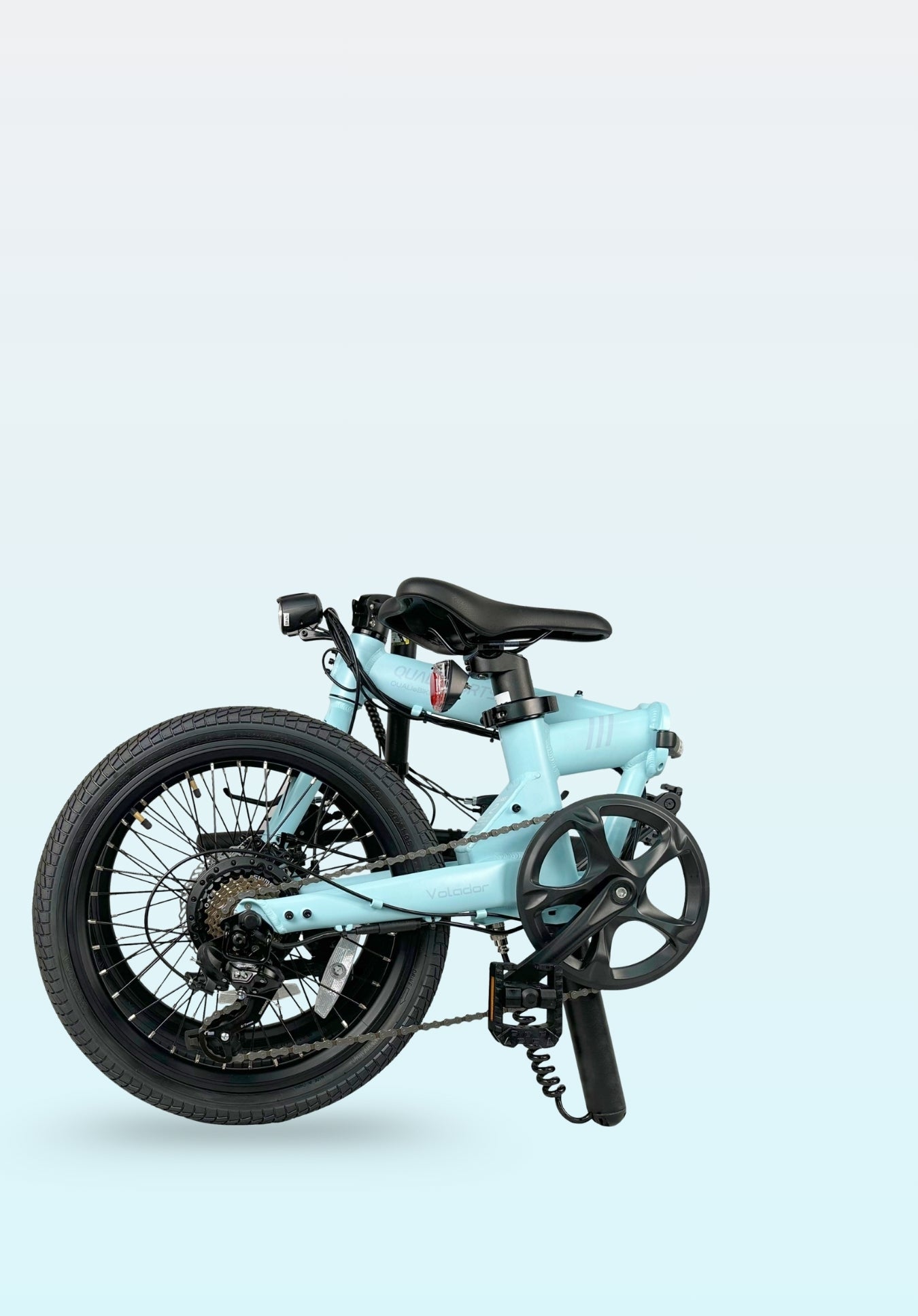
Compact Folding
Perfect for apartments, offices, and travel.

Reliable Performance
Built for daily commuting and long-term use.

About Qualisports
Qualisports is dedicated to creating lightweight, practical, and stylish electric bikes for modern urban riders.
We believe mobility should be simple, efficient, and accessible.
Real reviews and riding experiences of Qualisports Folding Electric Bikes.
Reviewers Say




Stay updated with our latest news, tips, and industry insights.
LEARN MORE ABOUT ELECTRIC BIKE

Folding eBike vs Regular eBike: Which Is Right for You?
by Qualisports USA
on Apr 15 2026
Folding eBike vs regular eBike — which is better for commuting and city life? Compare key differences and find the best fit for your lifestyle in 2026.

Best Folding eBikes for Beginners: Top Picks for 2026
by Qualisports USA
on Apr 12 2026
Maybe you've been watching cyclists zip past traffic on your morning commute and thought — yeah, I want that. Or maybe a friend showed up on an eBike this spring and made it look so effortless that you finally started googling.
Either way, you're here: thinking about buying your first electric bike, a little excited, maybe a little unsure where to start.
That's a completely normal place to be. The eBike market has exploded over the past few years, and the options can feel overwhelming if you don't know what you're actually looking for. Full-size commuter bikes, fat-tire models, cargo bikes, folding bikes — they all serve different needs, and none of them come with a clear "start here" label.
This guide is for first-time buyers who want something practical, approachable, and genuinely easy to live with. Specifically: folding eBikes, which happen to be one of the best starting points for new riders for reasons that go beyond just "they fold up."
Let's get into it.
Why Folding Electric Bikes Are Great for Beginners
Full-size eBikes are great machines. But for a first-time rider who's still figuring out the basics, they come with a few complications that folding bikes sidestep entirely.
Storage anxiety is real: One of the top reasons people delay buying an eBike is not knowing where it'll live. A folding eBike removes that barrier immediately — it goes in your apartment, under your desk, in a closet. You don't need a garage or a bike room or a hitch rack.
Smaller wheels and a lower center of gravity: This makes folding bikes feel more manageable for new riders. You're not throwing a leg over a 29-inch wheel. The step-through or mid-step frames on most folding models are easy to mount and dismount, which matters a lot when you're still building confidence.
Less intimidating handling: A compact electric bike at 20 mph feels very different from a full-size eBike at the same speed. The shorter wheelbase and nimble geometry suit urban riding and let new riders build their skills in a more forgiving package.
The folding mechanism itself is kind of fun: There's something satisfying about snapping your bike into a compact package and carrying it into a coffee shop. It feels intentional in a way that leaning a full-size bike against a city railing never quite does.
What Beginners Should Look for in a Folding eBike
Not all folding eBikes are created equal, and buying the wrong one as a first-time rider can turn an exciting purchase into a frustrating one. Here's what actually matters.
Weight and Ease of Handling
This is the most underrated spec for beginners. A lighter bike is easier to maneuver, easier to carry, and less exhausting to deal with on a daily basis. For most beginners, anything under 50 lbs is workable. Under 45 lbs is noticeably better. Under 42 lbs, and you start feeling the difference every time you pick it up. A lighter folding eBike gives you quicker, more predictable feedback, which builds confidence faster.
Motor Power (Not Overwhelming)
More power isn't always better for beginners. A 750W motor with aggressive throttle response can feel twitchy and unpredictable. A 350–500W geared hub motor delivers smooth, linear assist that's easier to manage, especially in traffic. You want progressive assist — power that builds gradually as you pedal.
Battery Range for Daily Rides
Most new riders don't cover more than 10–15 miles on an average day, and a folding eBike with a 25–35 mile real-world range covers that easily. What matters more than the maximum range number is the range you get at assist level 2 or 3, which is where most casual riders spend the majority of their time.
Comfort and Riding Position
An upright riding position — weight balanced, back not hunched, handlebars at a comfortable height — makes the learning curve gentler. If you're planning city riding on paved surfaces, a rigid fork is fine and saves weight.
Folding Mechanism Simplicity
For a beginner, a complicated folding system is an annoyance waiting to happen. The best folding mechanisms involve one or two latches, take under 30 seconds once you've done it a few times, and produce a stable folded shape.
Common Mistakes First-Time eBike Buyers Make
Chasing maximum range: Range figures are marketing numbers. Buy for your actual commute, not the biggest number on the spec sheet.
Overlooking weight: It affects your daily quality of life more than almost any other spec.
Skipping the test ride: If possible, try before you buy — or buy from a brand with a generous return window.
Buying the most powerful option: For a first bike, a 350–500W motor is almost always enough. 750W often feels excessive and hard to control in tight urban spaces.
Ignoring storage logistics: Measure the space and compare it to the folded dimensions before buying.
Not budgeting for accessories: A helmet, lights, lock, and bag add $100–$200 to your total. They're not optional.
Best Folding eBikes for Beginners in 2026
Budget-friendly (under $800): Entry-level options exist, but quality control is inconsistent. Hinges, brakes, and batteries vary a lot.
The Sweet Spot ($800–$1,200): This is where most of the best beginner-friendly electric bike options live. You get reliable components, quality fold mechanisms, and name-brand motors.
Premium range ($1,200–$2,000): More features (integrated lights, torque sensors, suspension forks). Worth it for serious commuters, but probably more bike than a true beginner needs on day one.
For most first-time buyers, a lightweight folding eBike in the $800–$1,200 range is the right call.
A Beginner-Friendly Choice: Qualisports Volador
The Qualisports Volador comes up consistently when people talk about folding eBikes that work well for new riders, and the reasons are pretty practical.
It weighs 41.2 lbs — light enough to carry one-handed for short stretches. The 350W MXUS geared hub motor delivers smooth, predictable assist, and the five-level pedal assist system lets you start at level 1 and gradually increase.
The fold is clean: the mid-frame hinge collapses in a single motion, and the handlebars fold separately, bringing the bike down to 32.7 × 15.8 × 26.4 inches in about 15 seconds.
Key Specification
Details
Weight
41.2 lbs (Super lightweight for an eBike)
Motor
350W MXUS Geared Hub Motor (Smooth & Predictable)
Range
Up to 31 miles (Pedal Assist)
Folded Size
32.7 × 15.8 × 26.4 inches (Carry-on luggage size)
Drivetrain
Shimano 7-Speed (Great for learning gears)
The mid-step aluminum frame makes it easy to mount and dismount in regular clothes. For an apartment dweller or city commuter buying their first eBike, the Volador doesn't ask you to compromise anything important.
How Easy Is It to Learn to Ride an eBike?
If you already know how to ride a regular bike, learning an eBike takes about twenty minutes. Seriously. The basic skills transfer directly. You're just adding the electric assist layer on top.
Your first ride might feel a bit awkward as the assist kicks in. Start on a quiet street or empty parking lot, set the assist to level 1, and spend fifteen minutes getting a feel for how the motor responds before heading into traffic.
Braking is the thing that catches most beginners off guard. eBikes are heavier than regular bikes, and at 20 mph they require more stopping distance. Practice braking from low speeds first.
Beginner Riding Tips for a Smooth Start
Start on a low assist level: You can always increase later.
Look ahead, not down: New riders tend to stare at the ground in front of the wheel. Look further ahead for more reaction time.
Brake before turns, not during: Slow down before the corner, then let the bike coast through.
Use both brakes evenly: Front brake only = going over the bars. Rear only = skidding. Even pressure gives you the best control.
Don't death-grip the handlebars: Relax your grip and let the bike do its job.
Ride predictably: Straight lines, clear signals, no sudden swerves.
Charge the night before: Plug in when you get home and forget about it.
Why Spring Is the Best Time to Start Riding an eBike
The weather is mild, the roads are dry, and there's enough daylight. Temperature matters for battery range too; spring temperatures are in the sweet spot where you get the full advertised range without range anxiety.
There's also a psychological component. Spring is when cycling culture wakes up. You get time to build the habit before the summer heat hits, making it much more likely you'll become a year-round commuter.
Real-Life Scenarios: First Week Riding Experience
Day 1 — The First Commute: You leave ten minutes early. You're on assist level 2 the whole way, cautious at intersections. It takes you about four minutes longer than Google Maps predicted, but you park the bike under your desk feeling quietly proud of yourself.
Day 3 — Getting Comfortable: The controls feel more natural. You bumped up to level 3 on a mild hill. You're not thinking about braking anymore — it's just happening.
Day 5 — The Grocery Stop: You stop at the corner store on the way home. Locking the bike outside for the first time takes a little longer, but riding home with a bag on your back is completely fine.
Day 7 — You Get It: The ride doesn't feel like an event anymore — it just feels like your commute. You're already thinking about a longer weekend ride.
FAQ
Are folding electric bikes good for beginners?
Yes — in many ways they're the ideal beginner option. They're easier to store, less intimidating to handle than full-size bikes, and the compact geometry suits urban riding where most beginners start. A quality folding electric bike for beginners like the Qualisports Volador gives you everything you need without overwhelming complexity.
How hard is it to ride an electric bike for the first time?
If you already know how to ride a regular bike, the transition to an eBike takes about 15–30 minutes on a quiet street. The assist adds speed, so you need to recalibrate your sense of braking distance and turning speed — but those adjustments happen quickly.
What is the best lightweight eBike for beginners?
The best options weigh under 45 lbs, have smooth pedal assist with multiple levels, and feature a simple fold mechanism. The Qualisports Volador at 41.2 lbs fits that profile well, delivering a 350W motor, 31-mile range, and an intuitive fold.
Can beginners use folding eBikes for commuting?
Absolutely. Folding eBikes are well-suited to commuting for beginners because they combine easy storage at both ends of the commute with manageable handling in traffic. The Volador's mid-step frame and five-level assist make city commuting approachable from day one.
How fast should a beginner ride an eBike?
For the first few rides, keep it under 12–15 mph while you learn how the bike responds to braking and turning. Once you're comfortable, you can push toward the 20 mph top speed. Most Class 2 eBikes cap at 20 mph by design.
How much range do I really need as a beginner?
For most beginners, 20–25 real-world miles covers daily commutes with plenty of buffer. The Volador's 31-mile range on pedal assist is more than enough for urban riders covering 10–15 miles per day.
Do I need a license to ride a folding eBike in the U.S.?
For Class 1 and Class 2 eBikes (pedal assist and throttle up to 20 mph), no license, registration, or insurance is required in most U.S. states. They're legally treated like regular bicycles in the majority of jurisdictions. Always verify your local laws.
What accessories do I need as a beginner?
The non-negotiables: a properly fitted helmet, front and rear lights, and a solid U-lock or folding lock. Nice-to-haves: a pannier bag, a small floor pump, and a rain jacket. Budget $100–$200 for this layer on top of the bike cost.
Your First Ride Is Closer Than You Think
The hardest part of buying your first eBike is usually just making the decision. Once you're actually on one — moving, feeling the assist kick in, arriving somewhere without being sweaty or stressed — the question of "should I have done this sooner?" answers itself pretty quickly.
Folding eBikes make that entry point as low-friction as possible. The storage problem is solved. The handling is manageable. The commute flexibility is real. And in spring especially, the conditions are about as forgiving as they get for a new rider building their first week of habits.
The Qualisports Volador is a strong starting point if you want a beginner-friendly electric bike that's genuinely easy to live with — not just easy to ride. At 41.2 lbs with a smooth 350W motor, a reliable 31-mile range, and a fold that takes seconds to learn, it's designed for exactly this: someone who wants to start riding without making it complicated.
Go find a quiet street this weekend and give it a try. You'll figure the rest out from there.Volador

How to Store a Folding Electric Bike: Small Space Guide
by Crazy K
on Apr 05 2026
Learn the best ways to store a folding electric bike in apartments, offices, and small spaces. Tips, product picks, and battery care included.

Electric Bike vs Public Transport: Which Is Better for City Commuting in 2026?
by Qualisports USA
on Apr 02 2026
Comparing electric bikes vs public transport for city commuting in 2026? Discover costs, time, and why the Qualisports Volador is a top commuter pick.

Best Lightweight Electric Bikes for City Commuting (2026 Guide)
by Qualisports USA
on Mar 26 2026
Looking for the best lightweight electric bike for city commuting? Explore top picks, expert tips, and why the Qualisports Volador is a top choice in 2026.

1150 S Milliken Ave #1062, Ontario, CA 91761
1150 S Milliken Ave #1062, Ontario, CA 91761